
Menopause Is a Chapter, Not a Closing
Every woman's experience with menopause is different. What stays the same is that you deserve care that listens, evaluates, and responds to what your body actually needs.
What Is Menopause?
Menopause is defined as the point when you have gone 12 consecutive months without a menstrual period — marking the permanent end of your reproductive years. In the United States, the average age of menopause is 51, though it can occur anywhere from the early 40s to the late 50s.
Once you reach menopause, you enter postmenopause — a phase that lasts the rest of your life. Estrogen and progesterone levels settle at permanently lower levels, and the fluctuations of perimenopause are replaced by sustained low-hormone status.
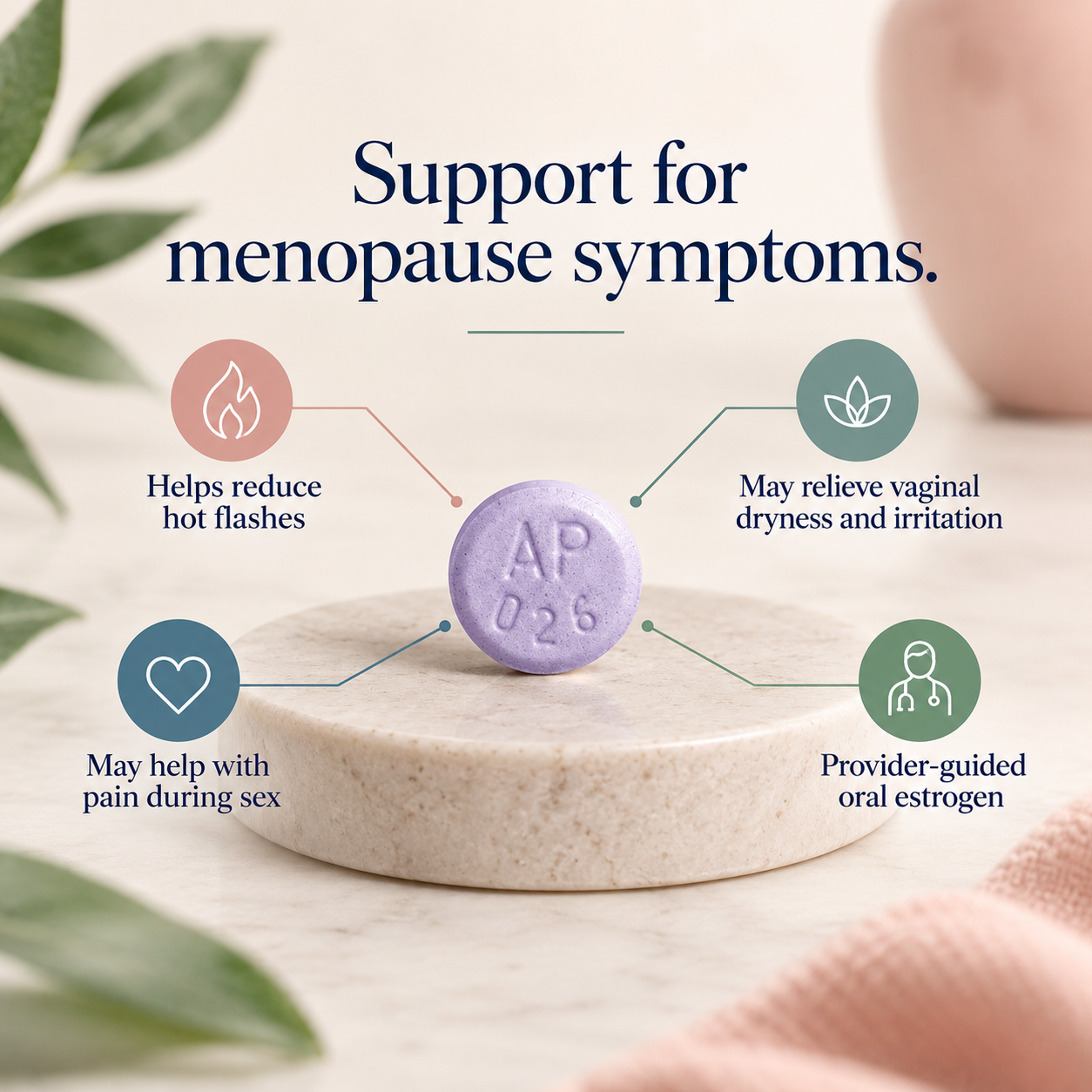
For some women, menopause is a relief — the end of periods, PMS, and hormonal unpredictability. For others, it brings a new set of challenges: persistent hot flashes, vaginal dryness, sleep disruption, bone density concerns, mood changes, and shifts in sexual wellness.
The experience is deeply individual. Some women sail through menopause with minimal disruption. Others struggle with symptoms that significantly affect their quality of life for years. Both experiences are normal, and both deserve clinical attention.
Symptoms That Bring Women to Us
You may experience some, all, or none of these. If several resonate, your provider can help you understand what's happening and what options exist.
Why Menopause Feels Different for Everyone
No two women experience menopause the same way. The intensity, duration, and mix of symptoms depend on a combination of factors — many of which are outside your control, and all of which shape what treatment approach is right for you.
Genetics play a significant role. If your mother or sisters had intense hot flashes, you may be more likely to experience them too. Body composition, overall metabolic health, chronic stress, sleep patterns, and cardiovascular health all influence how your body responds to declining estrogen.
Surgical history matters as well. Women who reach menopause through removal of the ovaries (surgical menopause) often experience a much more abrupt and intense onset of symptoms because there is no gradual hormonal decline — hormone levels drop suddenly.
The speed of your natural hormonal decline also affects your experience. Some women transition gradually with mild symptoms; others experience a sharper drop that produces more disruptive symptoms. This variability is exactly why personalized evaluation — not a one-size-fits-all protocol — is essential.
How Graceland Wellness Can Help
Comprehensive Evaluation
Your provider reviews your symptoms, medical history, current medications, risk factors, and family history. If lab work is helpful — thyroid, hormone panel, lipids, bone markers — your provider orders it through a local lab.
Personalized Treatment Plan
If treatment is appropriate, your plan may include systemic hormone therapy, low-dose vaginal estrogen, non-hormonal medications, vaginal moisturizers, or lifestyle modifications — chosen based on your symptoms, health profile, and preferences.
Long-Term Monitoring
Menopause is not a moment — it is a lifelong phase. Your provider monitors your response, adjusts your plan as your body changes, and remains available through secure messaging for the years ahead.
Treatment Options We May Consider
Every plan is individualized. Your provider recommends what is appropriate for your specific situation and health profile.
Systemic hormone therapy (estrogen, progesterone, or combination)
Low-dose vaginal estrogen for localized symptoms
Non-hormonal medications for hot flashes (e.g. SSRIs/SNRIs, gabapentin, fezolinetant)
Vaginal moisturizers and lubricants
Lifestyle and dietary support
Bone health evaluation and guidance
Sexual wellness support
Understanding Menopause
What is the difference between menopause and postmenopause?
Menopause is the specific point defined by 12 consecutive months without a menstrual period. Postmenopause is everything after that point — the phase you will live in for the rest of your life.
Most of what people call "menopause symptoms" actually occur during perimenopause (the years leading up to menopause) and postmenopause (the years after). Menopause itself is a single moment in time.
The terminology matters clinically because treatment timing can affect which options are appropriate. Hormone therapy started closer to menopause onset often has a different risk-benefit profile than hormone therapy started many years later.
Is hormone therapy still recommended?
For many women, yes — particularly when started within 10 years of menopause onset or before age 60. Modern hormone therapy is more nuanced than the blanket recommendations (or blanket warnings) of the past.
Your provider evaluates your individual risk-benefit profile, considering factors like cardiovascular health, breast cancer history, blood clot history, and personal preferences. The decision is personal and clinical — not one-size-fits-all.
Can menopause affect my mental health?
Yes. Declining estrogen influences serotonin and other neurotransmitters that regulate mood, sleep, and stress response. Many women experience new or worsening anxiety, depression, irritability, and emotional reactivity during and after menopause.
These are not character weaknesses. They are neurochemical effects of hormonal change — and they can be treated. Options range from hormone therapy to non-hormonal antidepressants to targeted lifestyle interventions, often in combination.
What about vaginal symptoms that don't go away?
Vaginal atrophy — the thinning, drying, and inflammation of vaginal and vulvar tissue — is a progressive condition that worsens without treatment. Unlike hot flashes, it does not resolve on its own, and it is not fully addressed by systemic hormone therapy alone.
Low-dose vaginal estrogen is highly effective for these symptoms and carries a very different risk profile than systemic hormone therapy because it acts locally with minimal systemic absorption. Your provider can evaluate whether this treatment is appropriate for you.
Do I need to see a provider in person?
Many aspects of menopause evaluation and management can be handled through telehealth — symptom assessment, medical history review, treatment planning, medication prescribing, and ongoing monitoring.
Some patients may need lab work, which your provider can order through a local lab. In certain cases — for example, if a physical exam is needed to evaluate a specific symptom — your provider may recommend an in-person visit. You will always be told when that is the case.
Menopause FAQ
Menopause Is Inevitable. Suffering Through It Is Not.
Connect with a provider who understands this chapter of your life.