Microdosing GLP-1/GIP — A Gentler Path to Weight Management
tirzepatide (compounded, microdose protocol) · weekly injection · low-dose, provider-paced protocol
- The lowest-cost entry point to dual GLP-1/GIP therapy at just $149/month
- Designed for patients who want to start slowly and build tolerance before escalating
- Lower starting doses mean fewer and milder side effects during the critical first weeks
- Ideal for patients new to GLP-1 therapy, sensitive to medications, or cautious about injectable treatments
- Your provider adjusts the pace entirely around your body’s response — not a fixed schedule
$149/month*
*Price based on yearly subscription plan. Compounded medications are not FDA-approved.
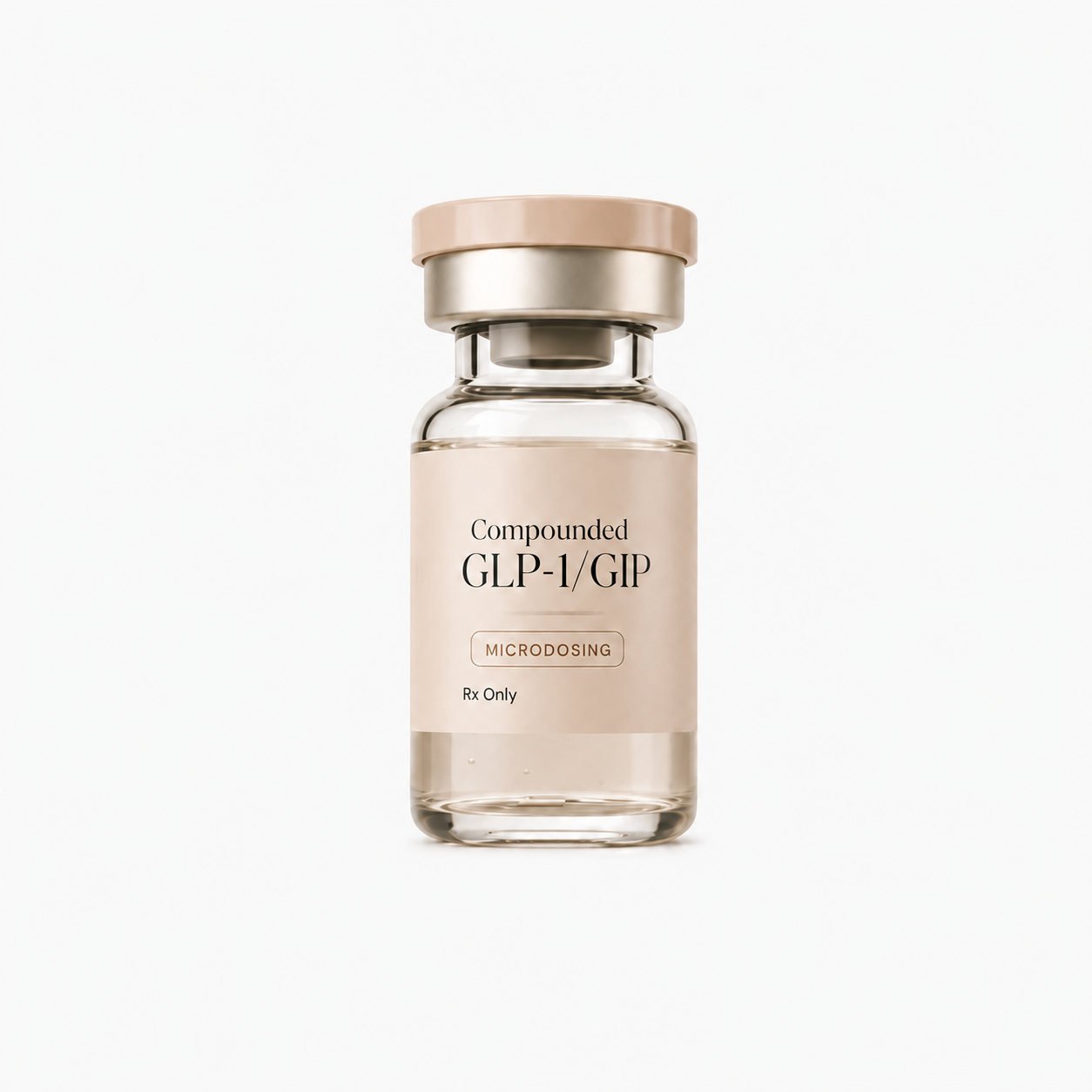
Microdosing GLP-1/GIP is a provider-guided weight management protocol that uses compounded tirzepatide at lower-than-standard starting doses, with a slower, more gradual escalation schedule tailored to each patient’s tolerance and response. It is not a different medication from standard compounded GLP-1/GIP — it is a different dosing strategy using the same compounded tirzepatide formulation.
The concept behind microdosing is straightforward: rather than beginning at the standard clinical starting dose and escalating on a fixed timeline, your provider starts you at a meaningfully lower dose and increases only when your body has demonstrated it can tolerate the current level comfortably. Each step up is smaller, the time between increases is longer, and the entire process is governed by your reported experience rather than a calendar.
This approach directly addresses the single biggest reason patients abandon GLP-1 therapy in the first weeks: gastrointestinal side effects. Nausea, vomiting, diarrhea, and stomach discomfort are the most commonly reported side effects of tirzepatide — and they are almost always worst at the beginning of treatment and at each dose escalation. By starting lower and moving slower, the microdosing protocol gives your digestive system significantly more time to adjust, reducing the severity and duration of these effects for most patients.
Like standard compounded GLP-1/GIP, the microdosing formulation is not FDA-approved. It is prepared by licensed compounding pharmacies and has not undergone FDA review for safety, effectiveness, or manufacturing consistency. Your provider will discuss this with you as part of the informed consent process before prescribing.
The pharmacology of microdosing GLP-1/GIP is identical to standard-dose tirzepatide — the same dual GLP-1/GIP receptor activation, the same appetite-reducing and metabolic effects. What changes is the dose-response curve your body experiences over time.
At standard therapeutic doses, tirzepatide activates GLP-1 and GIP receptors strongly enough to produce rapid and significant appetite suppression, gastric emptying delay, and metabolic changes. These effects are clinically powerful but can overwhelm your digestive system during the adjustment period — which is why nausea is so common early in treatment.
At microdoses, the receptor activation is gentler. Your brain and gut begin to adjust to the presence of exogenous GLP-1/GIP signaling at a pace that allows your body’s feedback systems to recalibrate gradually. Many patients on the microdosing protocol report noticing subtle appetite changes within the first one to two weeks — eating slightly less without conscious effort, feeling satisfied sooner during meals — without the sharp onset of nausea that higher starting doses can trigger.
As your provider increases the dose over subsequent weeks and months, these effects deepen progressively. The weight loss trajectory on a microdosing protocol typically starts slower than a standard protocol but catches up as the dose reaches therapeutic levels. The advantage is that patients are far more likely to sustain the treatment long enough to reach those levels, because they were not driven away by early side effects.
Think of it as the difference between jumping into cold water and wading in gradually. The destination is the same — full therapeutic benefit — but the path there is designed to keep you in the water rather than shocking you out of it.
Microdosing GLP-1/GIP is priced at $149 per month based on a yearly subscription plan — the lowest-cost GLP-1/GIP option available through Graceland Wellness.
The lower price compared to standard compounded GLP-1/GIP ($179/month) reflects the lower doses used, particularly during the initial months of treatment. As your dose increases and approaches standard therapeutic levels, your provider may recommend transitioning to the standard compounded program, which uses higher-concentration formulations. This transition is seamless — same medication, same pharmacy, same provider relationship — with a modest price adjustment.
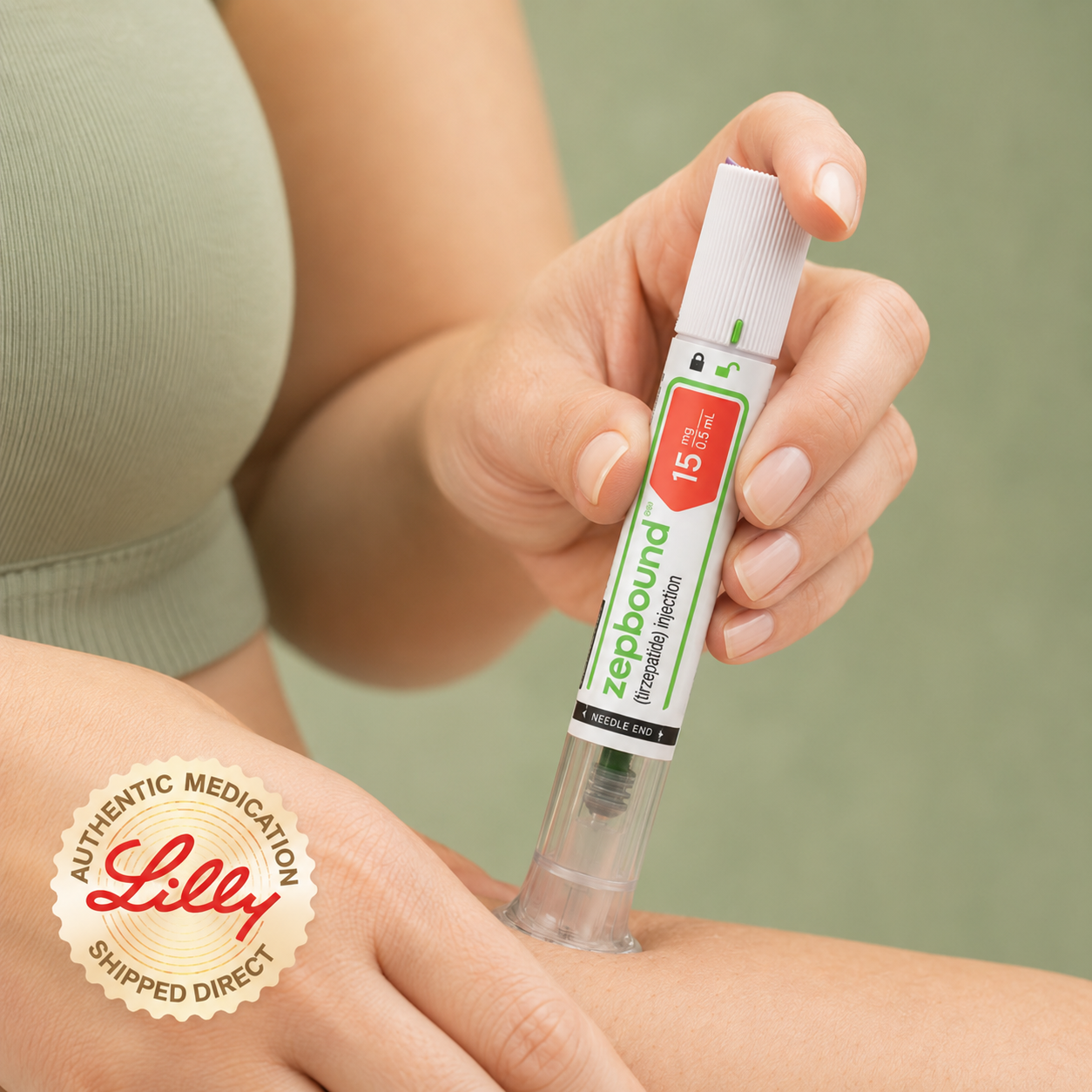
For comparison, brand-name tirzepatide (Zepbound®) costs $1,000 or more per month at retail. Microdosing offers the same dual-receptor molecule at roughly 85–90% less than brand-name retail pricing.
Graceland Wellness is entirely self-pay. The $149/month is a transparent, upfront price separate from your Graceland Wellness membership fee, which covers provider visits, the individualized dosing protocol, treatment adjustments, prescription coordination, and 24/7 Care Team messaging. Your medication ships directly to your door through our pharmacy partners.
Which Treatment Is Right for You?
Microdosing GLP-1/GIP exists for a specific patient: someone who wants the dual-action mechanism of tirzepatide but is concerned about tolerability, is new to injectable medications, or simply prefers to start as gently as possible. It is not for everyone — and understanding where it fits among your options helps you make the right choice.
If you are confident you can handle a standard GLP-1 protocol and want the fastest possible path to therapeutic doses, standard compounded GLP-1/GIP ($179/month) or brand-name Zepbound® may be more appropriate. These options start at higher doses and escalate on a more aggressive timeline, which typically produces earlier measurable weight loss.
If you have tried GLP-1 therapy before and abandoned it because of side effects during the initial weeks, microdosing addresses exactly that failure point. It gives your body the gradual introduction that standard protocols do not, increasing the likelihood that you will stay on treatment long enough to reach effective dose levels.
If you are entirely new to GLP-1 medications and feel anxious about starting an injectable treatment for the first time, microdosing combines a lower dose (less physiological intensity) with a longer adjustment window (more time to build comfort with the injection routine itself). Many patients who start with microdosing report that their anxiety about both the injection and the medication diminishes significantly within the first two to three weeks.
If you are sensitive to medications in general — meaning you tend to experience side effects more readily than average or react strongly to new drugs at standard doses — microdosing was designed with you in mind. Your provider monitors your response at each micro-increment and only moves forward when your body signals readiness.
If you are primarily cost-motivated and want the cheapest GLP-1 option regardless of dosing strategy, microdosing at $149/month is the lowest-priced entry point. However, if you tolerate medications well and do not need the gentler start, standard compounded GLP-1/GIP gives you more aggressive dosing for $30/month more.
Your Path to Treatment
Step 01
Start With Your Free Assessment
Complete a private online health questionnaire covering your weight, health conditions, medication history, previous GLP-1 experience (if any), and your goals. Tell us if you have concerns about side effects or are new to injectable medications — this helps your provider determine whether the microdosing protocol is the best starting approach for you.
Step 02
Personalized Protocol Design
This is where microdosing differs from every other option. Your provider does not apply a standard dose schedule — they design an individualized escalation plan based on your health profile, medication sensitivity, and comfort level. They explain the microdosing approach, its benefits and trade-offs versus standard dosing, and the non-FDA-approved status of the compounded formulation. You provide informed consent before any prescription is written.
Step 03
Pharmacy Preparation
Your prescription specifies the microdose concentration and is sent to a licensed compounding pharmacy. The pharmacy prepares your formulation at the lower concentration needed for your individualized dose schedule. Your medication is shipped to you with instructions on storage, preparation, and injection technique.
Step 04
Your Gentle First Weeks
You begin at a dose that is meaningfully lower than what standard protocols use as a starting point. For most patients, this means the first two to four weeks feel remarkably uneventful — mild or no appetite changes, minimal or no gastrointestinal effects. This is by design. Your body is acclimating to GLP-1/GIP receptor activation at a pace that prioritizes comfort over speed. Your Care Team checks in with you during this period and is available 24/7 through the portal.
Step 05
Gradual Escalation at Your Pace
Over the following weeks and months, your provider increases your dose in small, carefully timed increments. Each step up is triggered by your body’s readiness — confirmed through your reported experience and your provider’s clinical assessment — not by a predetermined calendar. As the dose approaches therapeutic levels, you begin to experience more pronounced appetite suppression and measurable weight loss. Your provider continues to monitor and adjust throughout, and can transition you to the standard compounded program when appropriate.
Microdosing GLP-1/GIP at a Glance
Type
Injectable (subcutaneous, low-dose protocol)
Frequency
Once weekly (provider-paced escalation)
FDA Status
NOT FDA-approved — compounded by licensed pharmacies
Manufacturer
Licensed U.S. compounding pharmacies
Active Ingredient
Tirzepatide (compounded, low-concentration)
Starting Cost
$149/month* — lowest GLP-1/GIP price available
Microdosing GLP-1/GIP 101
What does “microdosing” mean in the context of GLP-1 medication?
In pharmacology, microdosing refers to administering a medication at a dose significantly below the standard therapeutic level, typically as a strategy to assess tolerability, build physiological adaptation, or introduce a drug gradually before escalating to full therapeutic doses.
In the context of GLP-1/GIP weight management, microdosing means starting your tirzepatide treatment at a lower dose than what standard clinical protocols prescribe as the initiation dose, and escalating more slowly over a longer period. For reference, the standard Zepbound® initiation dose is 2.5 mg weekly — which is already a sub-therapeutic starting dose designed for tolerability. The microdosing protocol starts even lower than this.
The term does not imply that the microdose itself will produce significant weight loss. The early microdose phase is primarily about adaptation — letting your body adjust to GLP-1/GIP receptor activation at a pace that minimizes gastrointestinal disruption. Weight management benefits emerge as the dose gradually reaches therapeutic levels over subsequent weeks.
This is not a fringe or experimental approach. Gradual dose titration is standard practice across many areas of medicine — psychiatry frequently starts antidepressants at sub-therapeutic doses and escalates slowly, cardiology starts blood pressure medications low and adjusts upward, and endocrinology uses low-dose insulin initiation before optimization. Microdosing GLP-1/GIP applies the same clinical logic to incretin therapy.
Who is the microdosing protocol designed for?
The microdosing protocol is designed for four distinct patient profiles, though there is often overlap:
The first-timer. You have never taken a GLP-1 or GIP medication before. You may have heard about the side effects — particularly nausea — from friends, social media, or news coverage, and you want to minimize the risk of a difficult first experience. The microdosing protocol gives you the gentlest possible introduction.
The restart patient. You tried a GLP-1 medication before — perhaps semaglutide or tirzepatide at standard doses — and stopped because the side effects during the first weeks were too intense. The microdosing protocol offers a second chance at treatment with a fundamentally different onboarding experience.
The medication-sensitive patient. You know from experience with other drugs that you tend to react more strongly to medications than average. You metabolize things differently, you feel side effects that others breeze through, and you’ve learned to start anything new at the lowest possible level. The microdosing protocol respects that pattern.
The cautious or anxious patient. You are interested in GLP-1 therapy but apprehensive — about the injection, about the medication, about the process in general. Starting at a very low dose reduces the stakes of your first experience and builds confidence gradually. Many patients in this category report that the first two weeks on microdosing resolved most of their anxiety, because the experience was mild enough to feel manageable.
How does the microdosing schedule work?
Unlike standard protocols that follow a fixed escalation calendar (increase every 4 weeks regardless of how you feel), the microdosing schedule is driven by your body’s feedback.
Your provider establishes a starting dose well below the standard initiation level. After the first week, your Care Team checks in: How did you feel? Any nausea? Any changes in appetite? Any injection site discomfort? Based on your responses, your provider decides whether to hold at the current dose for another week, increase by a small increment, or adjust the plan.
This cycle — dose, assess, decide — repeats at every level. Some patients move through the micro-range quickly because they tolerate it effortlessly. Others spend several weeks at each level because their body signals that it needs more time. Both outcomes are normal and expected.
The goal is not to reach therapeutic doses as fast as possible — it is to reach them in a way that keeps you on the medication. In clinical practice, the patients who achieve the best long-term outcomes with GLP-1 therapy are the ones who stay on it consistently, and the microdosing approach is optimized for retention, not speed.
As your dose enters the standard therapeutic range, your provider may recommend transitioning to the standard compounded GLP-1/GIP program, which uses higher-concentration formulations optimized for maintenance dosing. This transition is seamless and involves no disruption to your treatment.
Will I lose weight during the microdosing phase?
This is the most honest question to address directly. During the initial microdose phase — the first two to six weeks at sub-therapeutic doses — most patients should not expect significant, measurable weight loss. The dose is below the level needed to produce the full appetite-suppressing and metabolic effects that drive weight reduction.
What you may notice during this phase is subtle. Slightly reduced appetite at meals. Feeling satisfied a bit sooner. Less frequent snacking. These are early signals that your GLP-1/GIP receptors are beginning to respond — but they are typically not dramatic enough to produce meaningful scale movement.
Measurable weight loss begins as your dose escalates into the therapeutic range — typically after the first four to eight weeks, depending on your individual escalation pace. From that point forward, the weight loss trajectory is comparable to what standard-dose patients experience, because you are now at comparable dose levels.
The trade-off is explicit: microdosing exchanges early-phase weight loss speed for early-phase tolerability. Patients on standard protocols may see earlier scale movement, but they also face a higher risk of side effects that cause them to stop treatment entirely. Patients on microdosing start slower but are significantly more likely to reach and sustain the therapeutic doses where real results happen.
Your provider will set this expectation clearly from the start. If you are primarily motivated by rapid early results and are confident you can tolerate a standard-dose launch, the standard compounded program or a brand-name option may be a better fit.
How is microdosing different from the standard compounded GLP-1/GIP?
The medication is the same — compounded tirzepatide from a licensed pharmacy. The difference is entirely in the dosing protocol and the patient it is designed for.
Standard compounded GLP-1/GIP ($179/month) begins at a dose within the normal clinical initiation range and follows a schedule similar to what brand-name tirzepatide protocols recommend. It is appropriate for patients who are comfortable starting at standard levels and are not particularly concerned about side effects during the adjustment period.
Microdosing GLP-1/GIP ($149/month) begins at a dose below the standard initiation level and escalates more slowly and in smaller increments. It is appropriate for the four patient profiles described above: first-timers, restart patients, medication-sensitive patients, and cautious patients.
The $30/month price difference reflects the lower-concentration formulations used in the microdosing program during the early phase. As your dose increases toward therapeutic levels, your provider may recommend transitioning to the standard program, which uses higher-concentration vials that are more practical at those dose levels.
Many patients view microdosing as an on-ramp — a way to enter GLP-1 therapy with training wheels, build confidence and tolerance, and then graduate to the standard program once their body has demonstrated it can handle the medication well. Your provider will guide this transition when the timing is right.
Can I switch from microdosing to a brand-name medication?
Yes, at any point. The microdosing program is not a commitment that locks you out of other options. Your provider can transition you from microdosing compounded tirzepatide to brand-name Zepbound® (or its KwikPen® variant), brand-name Wegovy® (semaglutide), or any other available option.
Common transition scenarios include: you have built tolerance through microdosing and now feel confident starting a brand-name product at its standard initiation dose, or you simply prefer the assurance of an FDA-approved product after having tested your body’s response to tirzepatide through the microdosing phase.
In fact, some patients use microdosing strategically for exactly this purpose — as a low-cost, low-risk way to confirm that their body responds well to tirzepatide before investing in the higher cost of brand-name medication. Once they know tirzepatide works for them, they transition to Zepbound® with confidence.
Is microdosing GLP-1/GIP safe?
The safety profile of microdosing GLP-1/GIP is governed by two factors: the safety of tirzepatide as a molecule (which applies at any dose) and the regulatory status of compounded medications.
At the molecular level, tirzepatide carries the same class-wide warnings at any dose — thyroid C-cell tumor risk, pancreatitis risk, and all other serious warnings described in the safety section of this page. A lower dose does not eliminate these risks, though some dose-dependent side effects (particularly gastrointestinal ones) are typically milder at lower doses.
At the regulatory level, compounded tirzepatide has not undergone FDA review regardless of the dose used. This means the same considerations about manufacturing consistency, potency verification, and bioavailability that apply to standard compounded GLP-1/GIP apply equally to the microdosing formulation.
Your provider discusses both dimensions of safety with you during the informed consent process. They monitor your response at every dose level and adjust the plan if any safety concerns emerge. The microdosing approach itself actually enhances safety monitoring in one important way: because the dose increases are smaller and more frequent, your provider has more data points about your body’s response and can detect issues earlier than a standard escalation schedule might allow.
Microdosing GLP-1/GIP FAQ
How long does the microdosing phase last?
The microdosing phase typically spans four to eight weeks, though it can be shorter or longer depending on your tolerance and provider’s assessment. Some patients move through it in three weeks; others spend ten weeks at micro-levels. Your provider determines the pace based on your reported experience — there is no fixed calendar to rush through.
Will I feel anything at such a low dose?
Most patients notice subtle changes during the microdosing phase — slightly reduced appetite, feeling satisfied sooner at meals, or reduced cravings between meals. These effects are mild by design. You should not expect dramatic hunger suppression or significant weight loss during this phase. The purpose is adaptation, not immediate results.
Is $149/month the permanent price, or does it increase?
The $149/month price applies while you are on the microdosing protocol. If your provider recommends transitioning to the standard compounded GLP-1/GIP program as your dose increases, the price adjusts to $179/month. Both prices are based on yearly subscription plans. Your provider discusses this transition timeline with you in advance.
Can I skip microdosing and go straight to standard dosing?
Yes. Microdosing is an option, not a requirement. If you are comfortable starting at standard clinical doses and are not concerned about early-phase side effects, your provider can prescribe the standard compounded GLP-1/GIP program from day one. The choice is yours, informed by your provider’s recommendation.
What if microdosing doesn’t produce any noticeable effects?
That is expected and normal during the early phase. The microdose is intentionally sub-therapeutic — you are not supposed to feel dramatic effects. The weight management benefits emerge as your dose escalates into the therapeutic range over subsequent weeks. If after reaching therapeutic doses you still do not experience the expected response, your provider can adjust the dose, change the escalation approach, or discuss alternative medications.
Is the microdosing injection the same as a standard injection?
The injection technique is identical — subcutaneous injection once weekly in the stomach, thigh, or arm. The only difference is the volume or concentration of medication being injected. Many patients on the microdosing protocol report that the injection itself feels slightly less intense (less burning or pressure at the site) because the volume may be smaller, though this varies by formulation.
Can I do microdosing with a brand-name medication instead of compounded?
Brand-name Zepbound® already has a built-in dose-escalation schedule that starts at 2.5 mg — which is a sub-therapeutic initiation dose. In that sense, the brand-name protocol already incorporates a degree of gradual introduction. However, the brand-name pen comes in fixed-dose increments and does not offer the ultra-low starting doses that the compounded microdosing protocol provides. If you want a gentler start than even 2.5 mg allows, compounded microdosing is currently the only option.
What happens after I finish the microdosing phase?
After your provider determines that you have successfully adapted to tirzepatide and reached a dose level where therapeutic effects are emerging, you transition to ongoing maintenance treatment. This typically means moving to the standard compounded GLP-1/GIP program at $179/month, or transitioning to brand-name Zepbound® if your budget allows. Your provider manages this transition seamlessly — there is no gap in treatment and no restart.
Ready to Start Gently?
Complete your free assessment and tell your provider you’re interested in the microdosing approach. They’ll design a protocol around your body’s pace — not a fixed schedule.
Get StartedTreatment is prescribed only when clinically appropriate by a licensed provider.